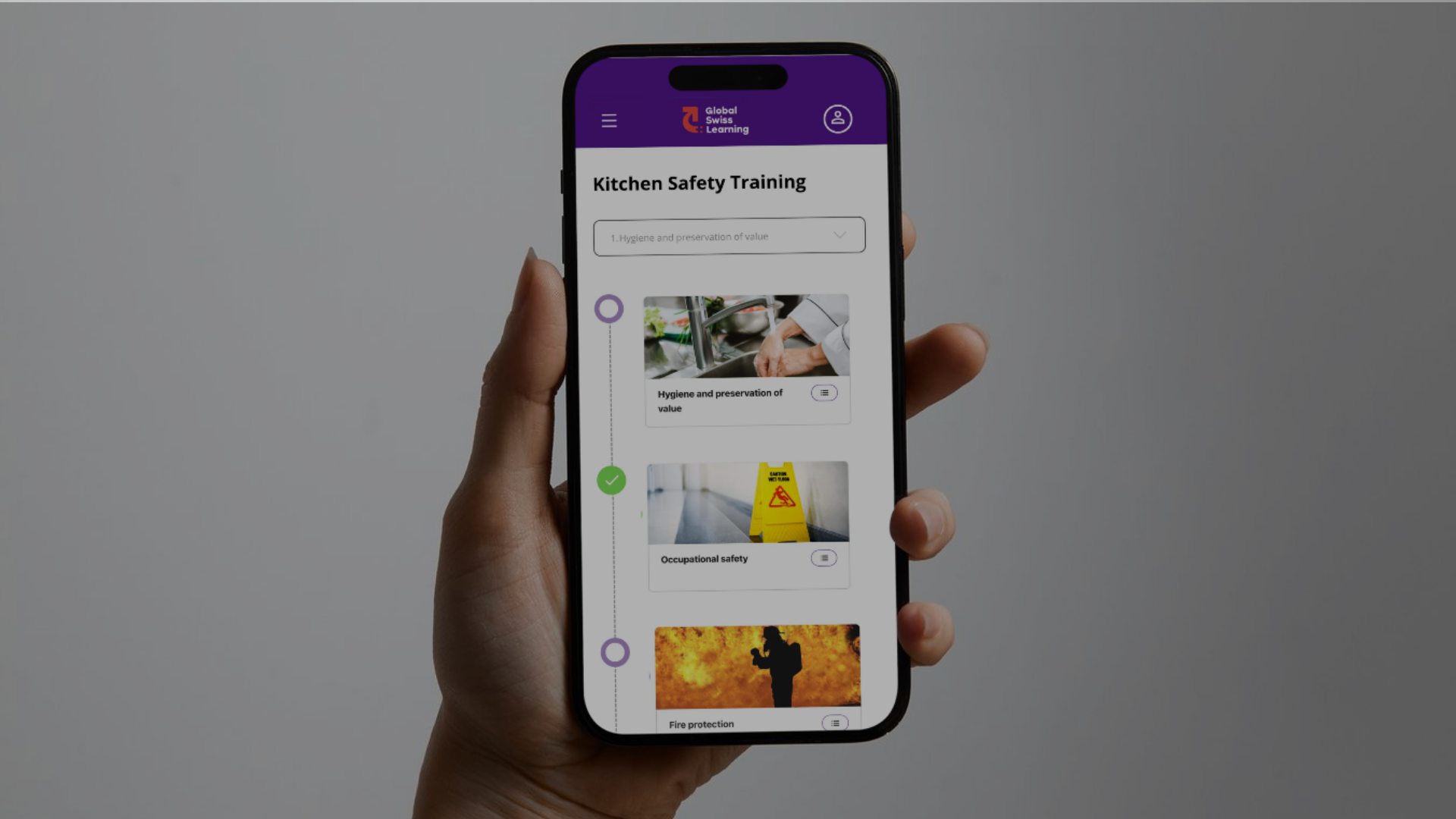
👉 Let's dive into how, with the right approach, hospitality organizations can help employees become confident and productive sooner while maintaining high standards:
Start training before the first shift
Many businesses wait until an employee arrives on their first day before introducing important information. As a result, valuable working time is spent covering basic topics that could have been completed in advance.
Providing digital learning before or during onboarding allows employees to familiarize themselves with procedures, expectations, and essential knowledge before they begin working independently.
Ask yourself:
🟢 What could employees learn before their first shift?
🟢 How much time do managers spend repeating the same information?
🟢 Can new hires access training from any device?
🟢 Are employees arriving prepared or starting from zero?
Standardize the basics
One of the biggest onboarding challenges is inconsistency.
When training relies entirely on individual managers, employees often receive different information depending on who trains them. This can lead to confusion and varying performance levels across teams and locations.
Standardizing core training ensures every employee starts with the same foundation.
This may include:
✅ Food safety and hygiene
✅ Fire and workplace safety
✅ Brand expectations
✅ Guest communication
✅ Workplace policies
✅ Operational organization and procedures
When the basics are consistent, managers can focus on coaching rather than repeating information.
Break learning into smaller modules
New employees often receive large amounts of information within a short period of time. The result? Much of it is forgotten.
Short, focused learning modules are easier to complete, easier to understand, and easier to remember. They also allow employees to revisit specific topics whenever they need a refresher.
👇 Best practice:
Deliver training in bite-sized modules that can be completed gradually rather than overwhelming employees with a full day of information at once.
Focus on the skills employees need first
Not every topic needs to be covered immediately. Prioritize training that helps employees perform safely and confidently in their role from day one.
For example:
→ Kitchen assistant and commis may need immediate training on food safety and workplace hygiene, with more advanced topics following later.
→ Chefs working during breakfast operations may need to understand more breakfast-specific topics—buffet service and workflows, preparation standards, and breakfast-specific recipes— before progressing to more generalized culinary topics.
By prioritizing essential knowledge first, onboarding becomes faster and more effective.
Give employees access to training when they need it
Traditional onboarding often relies on employees remembering everything from a single training session. In reality, questions arise long after onboarding is complete.
Providing digital learning resources allows employees to review procedures, refresh their knowledge, and find answers independently.
Ask yourself:
🟢 Are training materials available beyond day one?
🟢 What do employees do when they need a refresher?
🟢 Can employees easily revisit digital content on their own?
Reduce dependency on managers
Managers play a critical role in onboarding, but they should not be responsible for delivering every piece of training personally. The more onboarding depends on individual managers, the more difficult it becomes to scale.
A structured approach allows managers to spend less time repeating information and more time coaching employees, providing feedback, and supporting performance improvement.
👇 The goal:
Managers direct employees to resources and learning content on theoretical topics, and become coaches, helping build practical on-the-job skills when needed.
Measure onboarding success
Faster onboarding should still produce strong outcomes. Consider tracking the following success metrics during training:
✅ Time from employee hiring to productivity
✅ Learning / training completion rates
✅ Knowledge assessments and results
✅ Employee confidence on the job
✅ Early manager /performance feedback
✅ Early employee retention
These indicators help identify what's working and where improvements can be made.
Faster training creates better employee experiences
Employees want to feel capable and confident in their roles as quickly as possible. Clear expectations, accessible learning resources, and structured onboarding help reduce uncertainty and allow new team members to contribute sooner.
When onboarding is well organized, employees gain confidence faster, managers save time, and organizations create a more consistent experience across the workforce.
Looking forward
The fastest onboarding programs are not necessarily the shortest. But they are the most efficient. By standardizing core knowledge, using digital learning, prioritizing essential skills, and providing ongoing access to training, hospitality organizations can help employees become productive more quickly without sacrificing quality.
The result is a smoother onboarding process, stronger performance, and a better experience for both employees and managers.
Looking to accelerate onboarding while maintaining high standards?
👉 Explore Global Swiss Learning's digital hospitality training solutions designed to help teams learn faster, perform confidently, and deliver consistent results from day one: Solutions for companies.
# hospitality onboarding # hospitality staff training # employee onboarding hospitality # digital learning hospitality # hospitality workforce development # hospitality training program