Every chef starts somewhere
The hospitality industry offers opportunities for people from a wide range of educational, professional, and cultural backgrounds. Some learners enter the industry with no previous kitchen experience. Others may already have culinary experience but are adapting to a new country, language, workplace culture, or set of operational standards. This is particularly common in hospitality, where talented professionals frequently relocate internationally in search of new career opportunities.
Regardless of where they start, most professionals need to develop skills in three areas:
🟣 Food safety and hygiene
🟣 Professional workplace standards
🟣 Technical culinary competencies
Building this foundation early helps learners gain confidence and creates opportunities for career progression.
The first step: Building kitchen confidence
Many aspiring culinary professionals begin in entry-level roles, like kitchen assistant / helper, commis chef, apprentice or trainee. At this stage, success is often less about advanced culinary techniques and more about understanding how a professional kitchen operates. This includes:
🟣 Safe food handling
🟣 Personal hygiene
🟣 Workplace safety
🟣 Basic food preparation
🟣 Teamwork and communication
🟣 Understanding kitchen workflows
For employers, investing in foundational training early can improve onboarding, reduce mistakes, and help employees become productive more quickly.
👉 Recommended foundation
A strong starting point is Kitchen Safety Training, which helps learners build practical knowledge around food safety, hygiene, workplace safety, and professional kitchen standards.
Developing breakfast expertise: An underused stepping stone in a chef’s career
Breakfast is often one of the busiest and most operationally complex shifts in hospitality. Yet it is frequently overlooked as a valuable stepping stone in a chef's career. In many premium and luxury hotels, dedicated breakfast chefs play an important role in delivering the guest experience and ensuring smooth kitchen operations during one of the busiest periods of the day.
Breakfast operations require employees to develop skills in:
🟣 Egg cookery
🟣 Buffet operations
🟣 Live cooking stations
🟣 Forecasting and production planning
🟣 Food safety
🟣 Guest interaction
🟣 Sustainability and waste reduction
For many chefs, breakfast service provides valuable experience in speed, consistency, organization, and quality control. It also offers exposure to areas that are less common in other kitchen roles, such as direct guest interaction, live cooking, buffet management, and high-volume production. These are skills that remain relevant throughout a culinary career and can help prepare employees for future supervisory and leadership positions.
👉Recommended next step
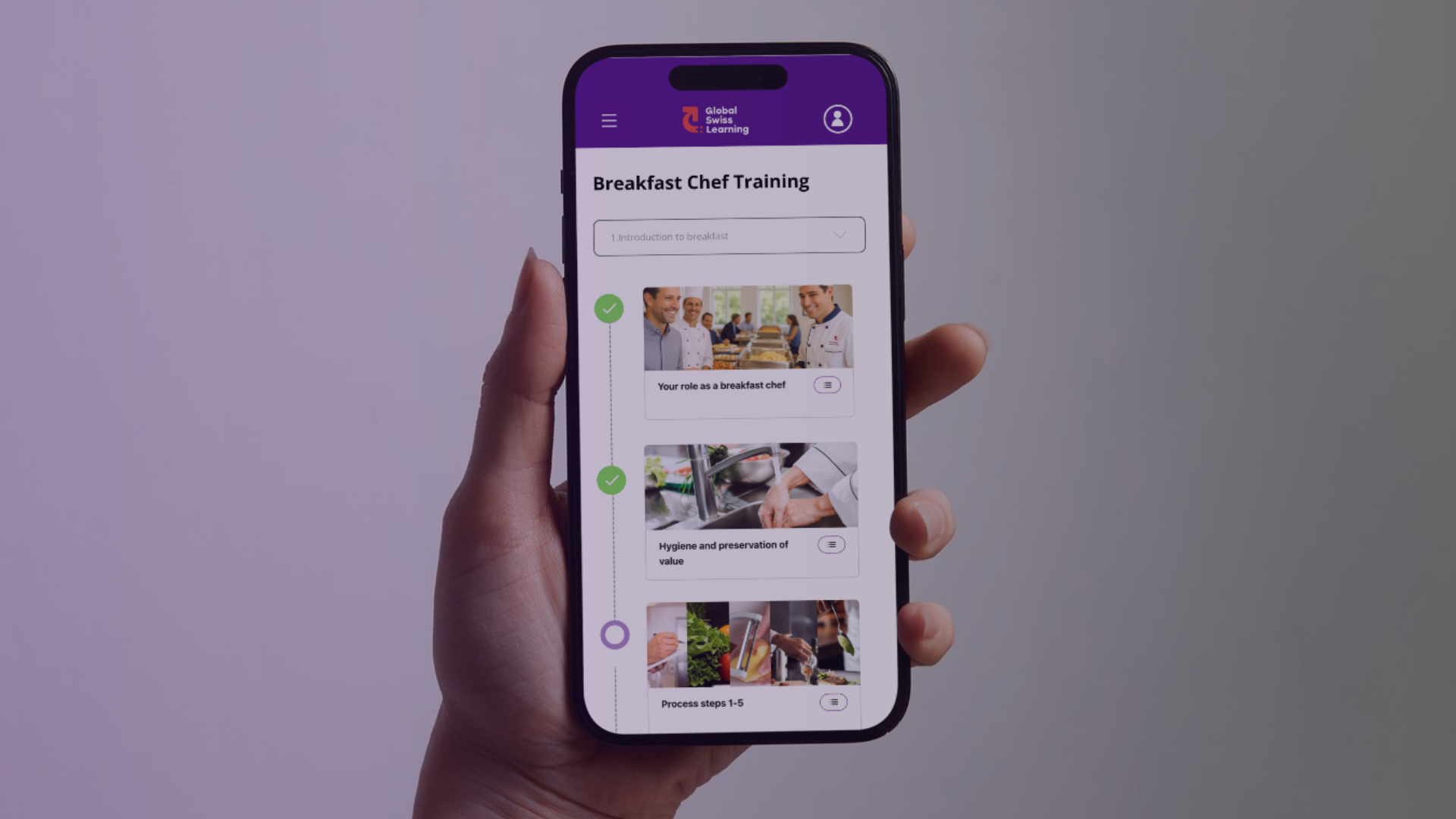
For employees looking for foundational kitchen skills, Breakfast Chef Training can help develop general culinary skills and knowledge, and breakfast-specific expertise, all while strengthening the operational, organizational, and guest-service skills required in professional hospitality environments.
Progressing towards professional chef standards
For many chefs, this is where career progression truly begins. While foundational training helps employees become productive in a kitchen environment, professional chef education helps them build the broader knowledge and competencies needed to grow their career over the long term.
In Switzerland, professional chefs typically complete a three-year vocational education pathway that combines practical workplace experience with formal culinary learning. This approach is internationally respected because it focuses not only on cooking techniques, but also on food safety, quality standards, operational excellence, and professional development.
For aspiring chefs, developing this foundation can open the door to future career development and intermediate culinary roles—such as Chef de Partie and Sous Chef. It can be equally valuable for experienced culinary professionals who have relocated internationally. Many chefs bring strong practical experience from previous roles, but may need support adapting to different operational standards, culinary techniques, safety requirements, or workplace expectations. A structured professional chef program helps create a common foundation, ensuring chefs from different educational, cultural, and professional backgrounds understand the same core standards and expectations.
👉 Recommended pathways
At Global Swiss Learning, learners can progress through several levels of professional chef education, beginning with the Professional Chef Certificate, and continuing through more advanced diploma pathways as their skills, responsibilities, and career goals evolve. Professional chef education and training helps learners strengthen culinary competencies while creating a clear pathway for future career development. For aspiring chefs, education and training helps build the technical, operational, and professional foundations needed to pursue a long-term culinary career. For experienced chefs, it provides an opportunity to strengthen existing skills, align with internationally recognized standards, and become operationally ready more quickly in a new environment. For employers, it creates a consistent benchmark across culinary teams, helping establish a shared understanding of the competencies expected from professional chefs at different stages of their career journey.
Career pathways benefit employers too
Career pathways are not only valuable for employees. They also help organizations address some of their most significant workforce challenges. Hospitality employers often struggle with:
🟣 Recruitment costs
🟣 Staff turnover
🟣 Skills shortages
🟣 Inconsistent standards
🟣 Limited internal promotion opportunities
Organizations that invest in career development create stronger talent pipelines and reduce their dependence on external hiring. When employees can see a future within the organization, they are more likely to stay, engage, and grow. The key is providing a pathway that supports that journey.
Advice for HR and learning & development teams
When designing culinary development programs, think beyond individual courses.
Instead, build learning pathways, like Entry level → Intermediate level → Professional level.
→ Entry level: Building confidence in a professional kitchen
🟣 Food safety
🟣 Hygiene
🟣 Workplace safety
🟣 Fire safety
→ Intermediate level: Taking on greater responsibility in kitchen operations
🟣 Kitchen fundamentals
🟣 Breakfast operations
🟣 Guest service
🟣 Production planning
🟣 Food waste reduction
→ Professional level: Building the foundation of a culinary career
Professional Chef Certificate + Diploma
🟣 Core culinary competencies
🟣 Swiss professional chef standards
🟣 Technical and operational proficiency
🟣 Quality and consistency in food production
🟣 Career readiness for professional chef roles
This approach allows employees to progress step-by-step while giving organizations a clearer framework for talent development.
Advice for aspiring chefs
You do not need to wait until you are hired to begin developing your skills. Employers increasingly value candidates who demonstrate initiative and commitment to learning. Before applying for culinary roles, consider strengthening your knowledge in food safety, kitchen operations, breakfast production, professional standards, and culinary fundamentals.
Completing relevant training can help you enter the workforce with greater confidence and stand out from other applicants. Most importantly, remember that many successful chefs did not begin their careers as chefs. They began by learning the fundamentals, building experience, and taking advantage of opportunities to grow.
Conclusion
Career development in hospitality is rarely a straight line. Some professionals start with no experience. Others bring existing skills from different countries and need support adapting to new standards and workplace expectations.
What successful culinary careers often have in common is access to a clear development pathway. By combining foundational kitchen skills, specialized operational training, and recognized professional standards, organizations can create stronger talent pipelines while helping individuals build meaningful, long-term careers.
Whether the goal is preparing a learner for their first kitchen role or helping an experienced employee progress towards professional chef standards, structured professional chef training and education creates opportunities for both the individual and the employer.
Looking to develop future culinary talent?
👉Explore our Kitchen Safety Training, Breakfast Chef Training, and Professional Chef Certificate and diploma programs to build clear career pathways for learners and hospitality teams.